Lessons From a Career Capturing Attention
For a large part of my career, I’ve worked around one deceptively simple question:
What makes someone stop scrolling?
Good taste. Better intel.
Like what you're reading?
See More ACThePlug in Google Search (opens Google)Add ACThePlug as a preferred source to help our stories appear more prominently in your Google results.
Lessons From a Career Capturing Attention
For a large part of my career, I’ve worked around one deceptively simple question:
What makes someone stop scrolling?
After years working across digital media, editorial, social, video and audience development, my answer is this:
People stop scrolling when content creates immediate curiosity, recognition, emotion, usefulness or surprise—and makes the value of continuing clear almost instantly. But stopping the scroll is only the beginning. The harder and more valuable job is giving people a reason to come back.
I’ve watched platforms emerge, dominate and become less important. I’ve watched entire content formats appear almost overnight. I’ve seen teams celebrate millions of views and then spend the next morning trying to understand why the next post didn’t perform.
And after all of that, I don’t think attention is nearly as mysterious as we sometimes make it.
It is, however, increasingly valuable.
Usually, something very human.
Curiosity.
Recognition.
Surprise.
Emotion.
Usefulness.
Identity.
A question they already wanted answered.
A perspective they haven’t heard expressed quite that way.
Sometimes it’s simply the feeling that the person, creator or publication on the other side understands what they care about.
The platforms and formats surrounding those impulses change constantly.
People don’t change quite as quickly.
That’s one of the biggest lessons I’ve learned from working in audience development: the mechanics of attention evolve faster than the reasons people give us their attention.
Understanding both matters.
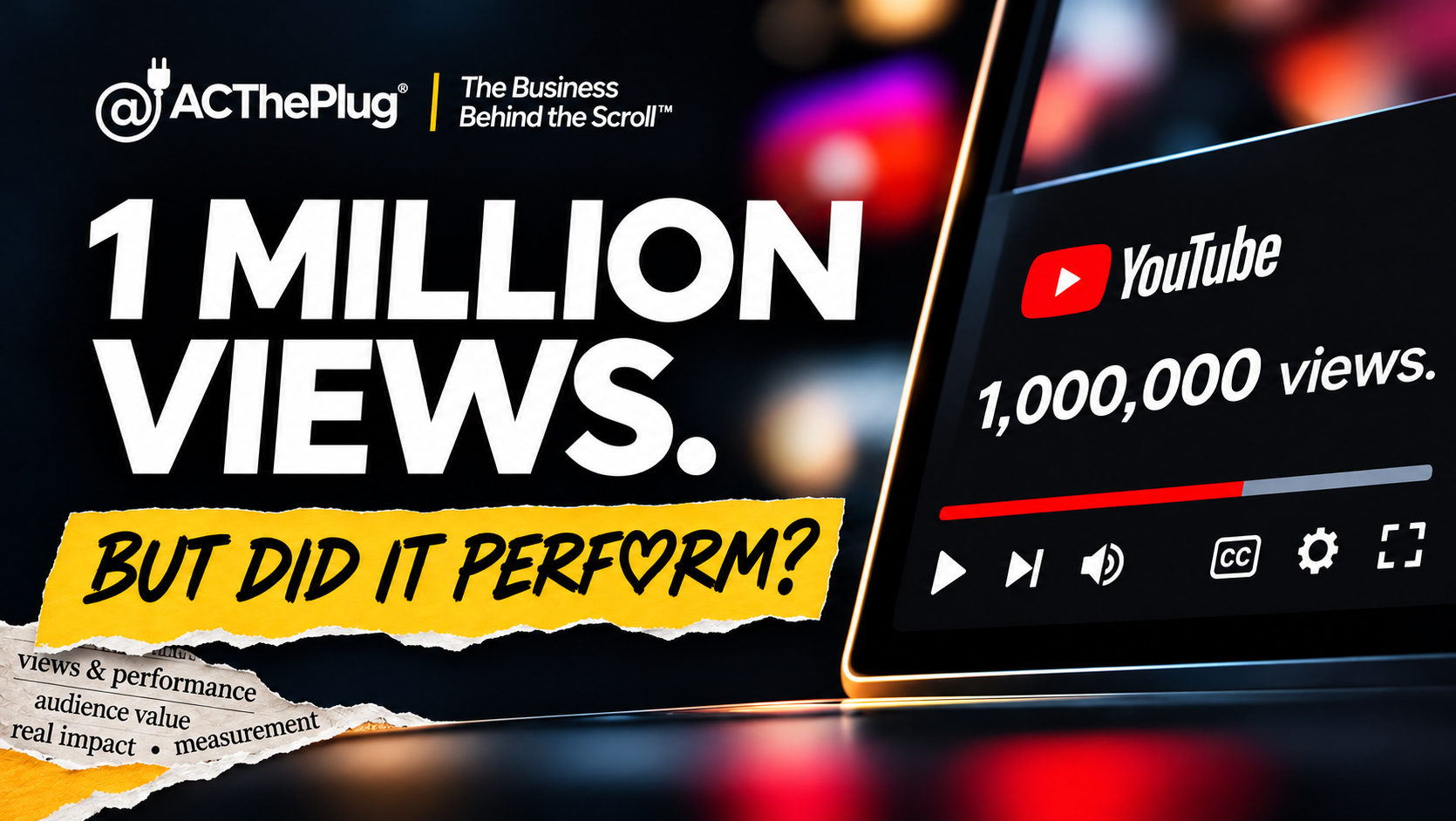
We tend to confuse attention with virality.
A piece of content can reach millions of people and still do very little for the brand or person behind it.
Virality tells you something traveled.
It doesn’t necessarily tell you why.
It doesn’t tell you whether people will remember who published it.
And it definitely doesn’t guarantee they’ll come back.
That’s why I’ve become far more interested in the distinction between capturing attention and building an audience.
One can happen by accident.
The other rarely does.
There are countless reasons something can explode online: timing, novelty, outrage, humor, celebrity, surprise or simply being picked up by the right person at exactly the right moment.
Audience is different.
Audience is accumulated.
It’s the result of repeatedly giving someone a reason to believe that when your name appears in their feed, whatever comes next may be worth their time.
That’s a much harder thing to build.
It’s also far more valuable.
Virality measures the movement of content. Audience measures the strength of a relationship.
Those aren’t interchangeable.
Very.
I’ve seen good ideas fail because they were badly packaged.
I’ve also seen relatively simple ideas perform extraordinarily well because someone understood how to introduce them.
The headline matters.
The thumbnail matters.
The first sentence matters.
The first few seconds of video absolutely matter.
Packaging isn’t decoration added after the content is finished.
Packaging is the invitation into the content.
None of those elements can rescue something that ultimately doesn’t deliver. But great work that nobody enters doesn’t get credit for being great.
This is why I hesitate when a team labels something “bad content” based solely on its performance.
Was the idea bad?
Or was the headline unclear?
Did the thumbnail give too much away?
Did it take eight seconds to get to the reason anyone should keep watching?
Was it published in a format that worked somewhere else but didn’t feel natural here?
Did we simply put it in front of the wrong audience?
Those are different failures.
And understanding the difference is part of content strategy.
Sometimes “low-performing content” is actually good content with bad packaging.
Before killing the idea, diagnose the failure.
People can tell when something wasn’t made for where they found it.
For years, social media was largely treated as distribution.
Make the thing somewhere else.
Put it on social.
Drive people back to the “real” content.
That model doesn’t fully reflect how audiences behave anymore.
For a lot of people, the post is the story.
The video is the experience.
The caption, comments and conversation around it are part of the product.
That’s why resizing isn’t the same thing as adapting.
A vertical crop doesn’t automatically make a video platform-native.
Neither does adding subtitles.
Platform-native content understands why someone opened that platform in the first place, how quickly they’re making decisions, what kind of context they expect and what behavior the platform has trained them to have.
The same story can require a completely different entrance depending on the room it enters.
That principle applies well beyond social.
Context shapes attention.
A lot more than whether a post performed.
Some of the most useful audience research I’ve encountered hasn’t come from a formal research project.
It came from people talking back.
Comments.
Shares.
Questions.
Arguments.
The sentence everyone keeps repeating.
The detail nobody seems to care about.
The unexpected part of the story people latch onto.
Analytics tell us what people did.
The audience can often help explain why.
That’s one of the reasons I’ve always believed social teams should be viewed as more than publishing teams.
They sit remarkably close to audience behavior.
They watch language shift in real time.
They see which conversations are accelerating, which ones have become exhausting, what people misunderstand, what they’re curious about and what they’re willing to spend attention on.
That’s not simply publishing activity.
It’s audience intelligence.
Organizations should treat it that way.
No.
This is probably one of the harder lessons of working in digital media.
Something works.
Everybody gets excited.
Then comes the natural question:
How do we do that again?
Sometimes the answer is that we shouldn’t.
A format can be successful because it is novel. By the fifth version, the novelty may be gone.
A conversation can be culturally relevant for a moment and tired two weeks later.
An audience may enjoy something without wanting your entire brand to become that thing.
Performance should inform creative strategy.
It shouldn’t replace creative judgment.
The goal isn’t to chase every spike on the graph.
It’s to understand which signals actually matter.
Sometimes a successful post tells you to repeat the format.
Sometimes it tells you something about the topic.
Sometimes it tells you something about timing.
Sometimes the lesson is simply that one exceptional idea worked exceptionally well.
Good audience strategy requires knowing the difference.
Stopping the scroll earns you a moment.
What you do with that moment determines whether you’ve started building anything.
In my experience, turning attention into audience requires a few things:
Deliver what you promised.
The hook can create curiosity, but the content has to reward it.
Develop recognizable value.
People should begin to understand what they consistently get from you.
Listen as much as you publish.
Audience development isn’t broadcasting louder. It’s learning continuously.
Don’t mistake reach for relationship.
Large numbers can be exciting, but repetition, trust and return behavior matter too.
Give people a reason to come back.
The strongest audience signal isn’t simply that someone saw you. It’s that they choose you again.
That’s the distinction I keep returning to.
The technology around attention will continue changing.
The platforms will change.
The preferred formats will change.
The algorithms will definitely change.
But people will still make remarkably fast decisions about whether something deserves their time.
So after years of working to capture attention, I’m actually less interested in the initial scroll stop than I used to be.
Stopping someone is useful.
Giving them a reason to come back is the real work.
Virality is rented.
Audience is built.
And if I have to choose between the two, I’ll take the audience every time.
Ashley “AC” Trybula is an award-winning content and audience executive, journalist, and media leader known professionally as AC. As Head of Content at The Shade Room, she leads editorial, social, video, and audience strategy for a social-first culture and entertainment publisher. Through ACThePlug, she writes about content strategy, audience development, social media, digital culture, media leadership, and the business of attention.
At The Shade Room, social is where the story often starts. Editorial and video give it more places to go.…
Read articleFame isn’t automatically a story. A press release isn’t automatically content. And a calendar can’t predict what people will care about tomorrow.…
Read articleWhy the YouTube ‘Engaged View’ is the New Gold Standard for Video ROI…
Read article